


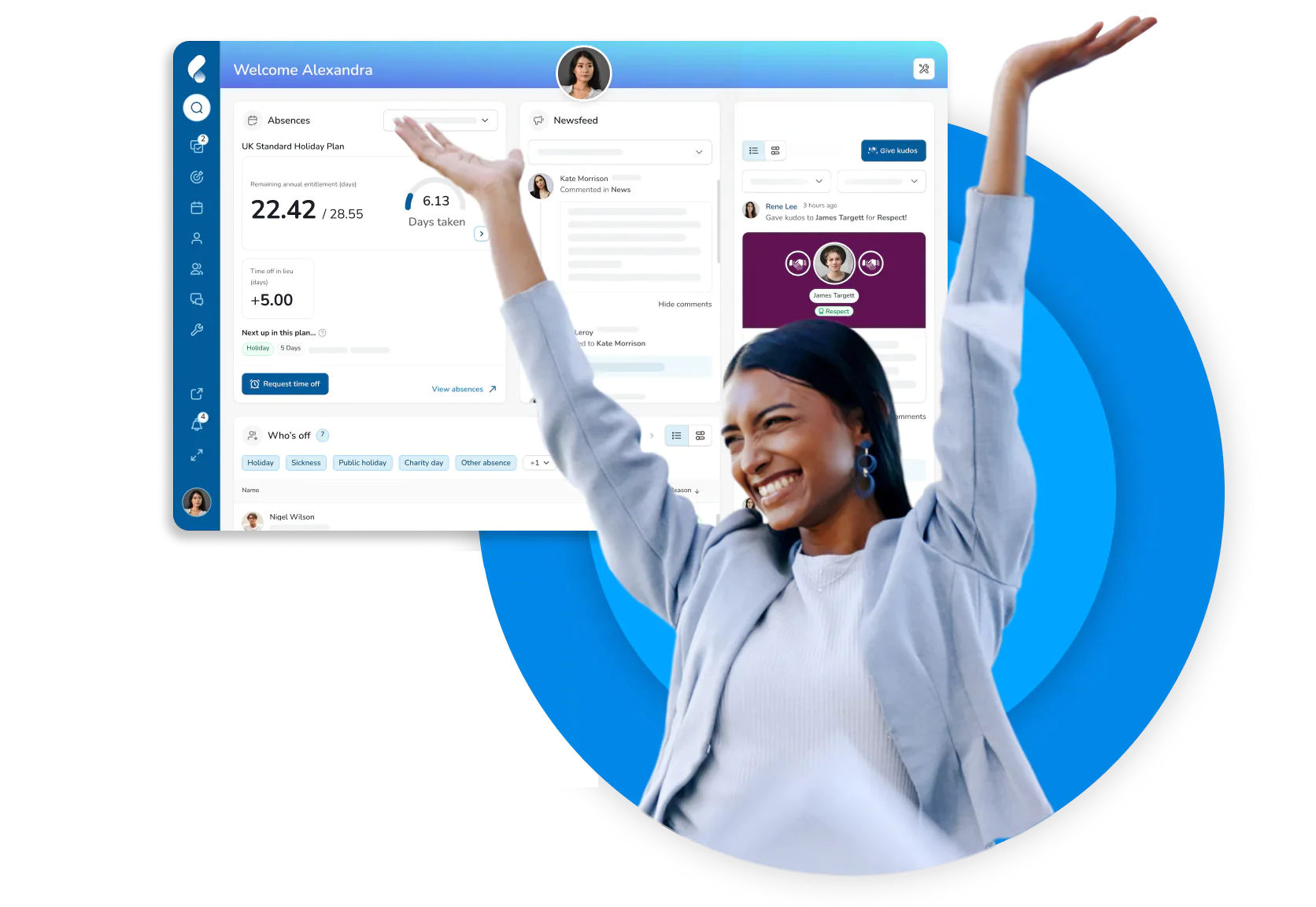
Time to invest in HR software?
As organisations grow, so does the complexity of managing people.
What starts as a handful of employee records stored in spreadsheets can quickly evolve into a maze of disconnected systems, manual processes, compliance obligations and reporting challenges. HR teams often find themselves spending more time updating records, chasing approvals and producing reports than focusing on the people and strategic initiatives that help businesses succeed.
That’s one of the reasons why HR software has become an essential part of modern people management.

Why does HR software matter as your organisation grows?
The right HR software can help organisations streamline administration, improve employee experiences, support compliance, provide valuable workforce insights and create a single source of truth for people data. For growing organisations in particular, it provides the foundation needed to scale HR operations without scaling administrative workloads at the same pace.
In this guide, we’ll explain what HR software is, how it works, the key features to look for, and how to choose a solution that supports both your people and business goals.
So, what is HR software?
HR software is a digital platform that helps organisations manage employee information, automate key HR processes and workforce activities throughout the employee lifecycle
It typically provides a central location for storing employee data while automating common HR tasks such as onboarding, absence management, performance reviews, reporting, document management and employee communications.

Rather than relying on outdated spreadsheets, paper records and disconnected tools, HR software brings people data and processes together into a single system that can be accessed by HR teams, managers and employees. This is being noticed by HR and business leaders, with a study by management consultancy BearingPoint revealing that 80% of HR leaders saying HR technology delivers clear business benefits, particularly in decision-making speed and administrative efficiency.
Modern HR software often supports every stage of the employee lifecycle; from candidate attraction and recruitment, to onboarding, learning and development, performance management, succession planning and payroll (either in-house or managed).
In simple terms…
Think of HR software as the operational backbone of your people function. It helps HR teams spend less time on administration and more time supporting employees, improving processes and delivering strategic value to the organisation.

How does HR software work?
At its core, HR software acts as a centralised database for employee information. However, modern systems do far more than simply store records. Today’s HR platforms connect people data with workflows, approvals, reporting and employee self-service, so the same information drives everyday processes rather than sitting in a file.
Take a holiday request. An employee books leave on their phone and their manager approves it with a click. Their remaining allowance updates straight away, and the team calendar shows who’s off. Because each step uses the same record, nothing is re-keyed and HR isn’t chasing spreadsheets for answers. Some platforms, including Cezanne, now add AI too, answering employees’ everyday HR questions using your own policies and passing anything more complex to the right person in HR.
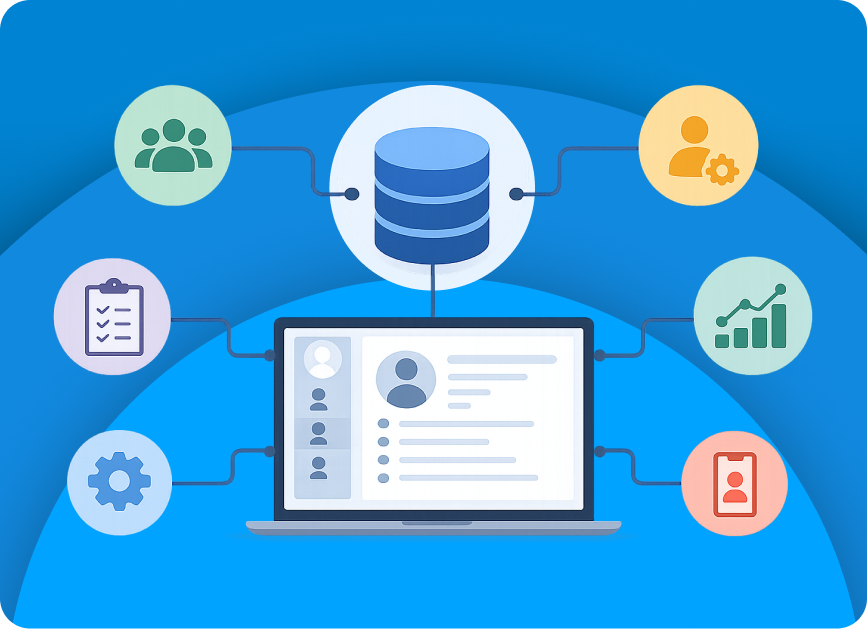
A typical HR software platform will include:
Centralised employee records
This is the core people management part of any HR software system. Employee information is stored securely in one place, including:
Having a single source of truth reduces duplication, improves accuracy and ensures information is easier to maintain.
HR workflow automations
With the right HR software, many routine day-to-day HR processes can be automated. For example:
Automation helps reduce manual administration while ensuring processes are completed consistently. For more information on this, check out our article 6 quick wins to streamline your HR processes today.
Employee self-service
An HR software platform with employee self-service functionality allows employees to manage many routine tasks independently. This might include:
Giving employees greater control improves the employee experience while reducing administrative demands on HR teams. Self-service is one of the big 5 benefits of an HR system, as we look at in more detail here.
Reporting and HR analytics
One of the most valuable benefits of HR software is improved visibility. Instead of spending hours compiling reports manually, HR teams can access real-time workforce data and use AI-powered tools to support decision-making. This may include insights into:
The result is better-informed decisions and greater confidence in workforce planning. It’s a topic we look at in depth in our article Why HR analytics is about more than dashboards and reports.
HR software integrations
Modern HR software solutions often integrate with many other business systems, including:
Integrated or native systems help eliminate duplicate data entry and improve operational efficiency across the organisation. Payroll is one such core function which can be managed with the right software, and it’s something we explore further in Payroll software: native vs. integrated: what’s the difference?
Why HR software has become essential for growing organisations
As businesses grow, people processes become harder to manage manually. What worked for 50 employees often breaks down at 150, 500 or 1,000, and more sites, entities and pay schedules only add to the load.
Johnsons 1871, a group of specialist contractor businesses run by one central HR and payroll team, found this out first-hand. Employee data lived in spreadsheets and SharePoint folders, and payroll was emailed between managers, HR and finance. “There were no real processes,” says People Partner Katie Jones. Since bringing HR and payroll together with Cezanne, the team saves more than 50 hours a month, and payroll errors have all but disappeared. You can read the full story here.
HR software gives growing organisations a way to keep processes consistent and see what’s happening across the business, without adding admin every time headcount goes up.


We had no centralised place for people data, it was all managed through various unconnected systems or spreadsheets. With the company undergoing growth, it was a totally unsustainable way of doing things
Hilary Rapinet, HR Project Manager
Reducing workforce administration
Many HR professionals spend significant portions of their working week on repetitive administrative tasks. These can include:
- Updating employee records
- Processing absence requests
- Chasing approvals
- Managing documentation
By automating routine activities and centralising information, HR software helps reduce administrative workloads and frees up time for higher-value work. You can learn more about some of the best automation tools for hr teams here.
Improving the employee experience
Employees increasingly expect workplace technology to be as intuitive as the systems they use in their personal lives. Providing easy access to information, self-service capabilities and streamlined processes helps create a more positive employee experience. This can be particularly important in competitive labour markets where employee expectations continue to rise.

Supporting workforce compliance
Changing employment laws and legislation, payroll requirements and data protection obligations create ongoing compliance responsibilities for employers.
While even the most advanced HR software cannot replace professional advice or legal expertise, it can help organisations maintain accurate records, create audit trails and improve process consistency.

Creating a single source of truth
Many organisations struggle with fragmented data spread across multiple systems and spreadsheets. This often leads to:
- Conflicting information
- Duplicate records
- Reporting inconsistencies
- Increased administrative effort
A unified HR platform helps establish a single source of truth for workforce information.
Enabling better workforce decisions
People data becomes increasingly valuable as organisations grow. HR leaders are expected to provide insights into workforce trends, employee engagement, retention, productivity and future workforce requirements.
HR software that includes powerful analytical tools provide the visibility needed to support evidence-based decision-making.


Cezanne HR has totally changed the way we run HR within Vision Direct. Going from spreadsheets and manual data entry where you couldn’t guarantee the data would be correct… we now have accurate point-in-time reporting, accurate employee data, accurate salary data… just everything! It really has changed everything for us now.
Christine North, HR Manager

Types of HR software explained
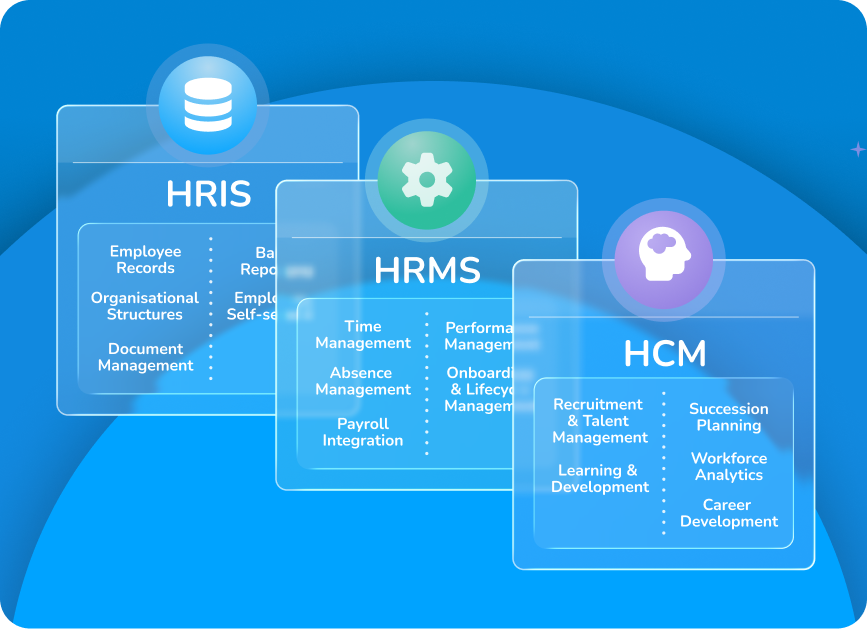
If you’ve started researching HR software systems, you’ll have noticed the market has a language all of its own. Terms like HRIS, HRMS and HCM appear across vendor websites and review sites, often with little explanation of what they mean. Many providers use them interchangeably, so the same product might be described differently depending on who’s selling it. That can make it surprisingly hard to compare like with like when you’re putting a shortlist together.
There are real distinctions behind the acronyms, though, and knowing them will help you ask sharper questions in demos. Broadly speaking, each term describes a different scope. At one end are systems built to store and manage employee records. At the other are platforms designed to support the whole employee lifecycle, from hiring through to development and exit. In practice, the lines have blurred, and most modern cloud platforms cover far more ground than a strict definition would suggest. Scroll down to learn about each in more detail…


What is an integrated HR platform?

Today, many modern providers now offer integrated HR platforms that combine elements of HRIS, HRMS and HCM functionality within a single system – and this includes Cezanne.
Rather than purchasing multiple standalone products, organisations can manage employee data, recruitment, onboarding, performance, learning, payroll (both in-house and /or managed) and workforce analytics through one connected platform. For growing organisations, this often provides greater visibility, improved data consistency and a better user experience.

Key HR software features
Not every organisation requires the same functionality, but there are several core capabilities that most modern HR systems should provide.
Employee records management
A central employee database remains the foundation of effective HR software. Key capabilities include:
• Secure record storage
• Employee profiles
• Organisational charts
• Document management
• Role and reporting structures

Workflow automation
Automation helps streamline repetitive processes while reducing the risk of errors. Examples include:
• New starter workflows
• Approval processes
• Contract updates
• Probation reminders
• Employee lifecycle events

Want to know how HR automation can have a transformational effect on your people operations? Then check out this article: HR Automation: less admin, more impact!
Employee self-service
Self-service functionality empowers employees while reducing HR administration.
With the right solution, employees can:
• Update personal details
• Submit requests
• Access documentation
• View company information

If you’re looking to encourage your employees to use HR software with self-service features, discover how in this article: 6 top tips to get your employees using self-service HR
Document management
Managing contracts, policies and employee documentation becomes increasingly challenging when a company increases in size.
Integrated document management helps remove a reliance on paper-based documents by centralising important information while improving accessibility and governance. This makes it not just easier to keep track of important documents and policies, but also far more secure.

You can learn more about document management on integrated HR software systems here.
Absence management
HR platforms that include absence management software give people teams the tools to effortlessly manage:
• Holiday requests
• Sickness tracking
• Leave management
• Absence reporting
All this provides greater visibility into workforce availability and attendance patterns; meaning HR teams can make better decisions and take more proactive measures.


We can trigger alerts for different scenarios, such as if someone is off sick with stress or moves into long-term sickness absence, so it’s immediately on our radar. It’s all very straightforward to set up, and it helps us be more proactive rather than reactive.
Caroline Bellamy, HR Manager
Performance management
Many HR platforms now include integrated performance management software to support:
• Goal setting
• Performance reviews
• Continuous feedback
• Development planning
This mix of automated tools and self-service features helps organisations create more structured and meaningful performance conversations.

Does your business need performance management software? Here are 7 signs you can’t ignore.
Learning and development
With an HR software system that includes a modern learning management system – LMS – you can help your business deliver critical knowledge to employees, customers, and partners at any time, on any device – sometimes even offline. LMS capabilities may include:
• Training management
• Course delivery (on and offline)
• Compliance tracking
• Skills development
In short, an LMS helps support employee growth & development, but can also assist organisations maintain compliance requirements.

Learning and development platforms are something we take a look at in more detail in this online guide: 6 features your LMS must have (and why!)
Recruitment & talent acquisition
Many modern HR software solutions include recruitment platforms that help organisations attract candidates, manage vacancies and streamline hiring workflows from a single system. Key capabilities often include:
• Vacancy creation and approval workflows
• Careers site management
• Candidate attraction tools
• Applicant tracking
• Interview scheduling
• Hiring manager collaboration
• Recruitment reporting

Integrating recruitment with the wider HR platform can also improve data consistency and reduce administration by allowing successful candidates to move seamlessly into onboarding and employee records management. It’s something we look at in this article: The real benefits of an applicant tracking system (ATS) for SMBs.
Recruitment software in action

This organisation reduced their recruitment costs by over 85% and improved their candidate experience with Cezanne’s recruitment software.
Dan Regan, HR Business Partner
Walsh Waste and RecyclingAugust 2026
Onboarding and lifecycle management
Onboarding and lifecycle management tools help HR teams deliver consistent, engaging experiences while ensuring key processes are completed efficiently. Common capabilities include:
• Preboarding workflows
• New starter task management
• Document collection and verification
• Automated reminders
• Probation management
• Internal job changes
• Offboarding processes
By automating lifecycle events, organisations can create a smoother experience for employees while reducing the administrative burden placed on HR teams and managers. If you want to learn how to make onboarding stress free for everyone, have a read of this article.


The Onboarding module allows us to do a lot of the education before people join us. It allows us to streamline our administration. Everything, from the compulsory health and safety training to the ordering of uniforms, and the ordering of airport identity cards, the collection of essential data… it’s all done through Onboarding in Cezanne
Ian Reece, Group Human Resources Director
Expense management
Expenses are one of those tasks which can eat into HR teams’ valuable time. HR platforms with integrated expense management software can automate many expense related tasks, with features such as:
• Mobile expense submissions
• Receipt capture using OCR technology
• Mileage claims management
• Automated approval workflows
• Corporate card matching
• Automated policy compliance controls
• Real-time reporting dashboards

If you’re losing time to managing your company’s expenses, we’ve created a Quick guide on how to simplify expense claim approvals.
Reporting and workforce analytics
Modern HR teams increasingly rely on data to support strategic decision-making. HR analytics can bring your data and key HR metrics together to help analyse metrics such as:
• Headcount
• Turnover
• Diversity
• Absence
• Performance
• Recruitment outcomes

Reporting and analytics software can provide valuable insights that support workforce planning and organisational growth. It’s something we look at in detail in our article Why HR analytics is about more than dashboards and reports.
The key benefits of HR software
While every organisation has its own priorities, most invest in HR software for the same reason: to make managing people simpler, more efficient and more effective.
The right HR solution doesn’t just reduce administrative workload. It’s something that all users can love to use, can improve employee experiences, strengthen compliance and provide the insights leaders need to make better workforce decisions.
Scroll down to learn some of the key benefits of modern HR software…


Greater efficiency
One of the most immediate benefits of HR software is the reduction in manual administration.
Tasks that once required emails, spreadsheets and paperwork can often be completed through automated workflows and self-service tools. This allows HR teams to spend less time processing transactions and more time focusing on initiatives that support employee engagement, performance and organisational growth. If you think your current HR processes are harming employee engagement at your business, read this article.

Our business is incredibly fast paced. If I want HR to be taken seriously and for the organisation to engage with us, I need to stay up to speed. Cezanne has dramatically cut the time it takes us to manage essential processes.
Lizanne, HR Business Partner

Improved accuracy
When employee information is stored across multiple systems and spreadsheets, errors become inevitable.
A centralised HR system helps ensure data is consistent, up-to-date and accessible, reducing duplication and minimising the risk of mistakes. This is particularly important when information feeds into other business processes such as payroll, workforce planning and compliance reporting.

The accuracy we now have in both our data and reporting has made a massive difference. We’re now able to easily see patterns and trends in our data, which is great as it helps us to shape where we’re going from an HR point of view. I can see where our turnover is, I can see where our absence spikes are… it’s all really helped.
Sarah Jackson, HR Manager

Better employee experiences
Employees expect workplace technology to be simple and intuitive. Luckily, the right HR software can help create a more seamless experience by giving employees easy access to information, requests and services through self-service functionality. If you want to learn more about enhancing the employee experience and managing expectations, read our quick guide: How HR can successfully manage employee expectations
Whether they’re booking annual leave, updating personal details or completing a performance review, employees benefit from a more consistent and transparent process.

Stronger compliance and governance
HR teams are responsible for managing large volumes of sensitive employee data.
Modern HR software helps organisations maintain accurate records, manage permissions appropriately and create audit trails that support good governance practices. While compliance always requires people and processes, technology can play an important supporting role. Here are 7 ways to ensure GDPR compliance using HR software.

Better visibility and reporting
Perhaps one of the most transformative benefits of HR software is the ability to access workforce insights quickly and confidently. Rather than spending days compiling reports, organisations can access real-time information that helps them understand trends, identify challenges and support strategic planning. Basically, if you need workforce insights fast, you need modern HR software!

7 signs you've outgrown spreadsheets and manual HR processes
Many organisations don’t actively decide to replace spreadsheets. Instead, they gradually reach a point where manual processes are no longer sustainable. It tends to creep up as headcount grows or the business opens a second site. Tasks that once took an afternoon start eating into every week, and the risk of a costly error grows with them. When employee data is passed around by email, that risk is very real. For example, sending personal data to the wrong recipient was the most common type of breach reported to the Information Commissioner’s Office in 2025, making up around 18% of reports.
If any of the following sound familiar, it may be time to review your HR technology stack.

-
Employee information is stored in multiple places
When HR data exists across spreadsheets, shared drives, emails and paper files, maintaining accuracy and data security becomes increasingly difficult. Without a single source of truth, reporting becomes more complex and confidence in the data often decreases. -
Reporting takes too long
If producing a simple headcount, turnover or absence report requires hours of manual work, your systems may be holding you back. Modern HR software can provide real-time reporting with significantly less effort. -
HR administration dominates the working week
If your team spends most of its time processing requests, updating records and managing paperwork, opportunities to focus on strategic priorities may be limited. -
Employee self-service doesn’t exist
Employees increasingly expect instant access to information and services. Without self-service capabilities, HR teams often become a bottleneck for routine requests. You can learn more about how you can encourage employees to use self-service HR software in this article: 6 top tips to get your employees using self-service HR -
Compliance feels difficult to manage
Tracking training records, policies, right-to-work documentation and employee information manually can create unnecessary risk and administrative effort. We delve deeper into the dangers of non-compliance and how HR software can mitigate risks in this article: 7 ways to ensure GDPR compliance using HR software -
Processes vary across departments
As organisations grow, inconsistency becomes harder to manage. Modern HR software platforms can help create standardised processes that improve efficiency and fairness. -
You lack workforce visibility
If leadership teams regularly ask questions that take days to answer, your organisation may be missing opportunities to use people and workforce data more effectively.
How to choose the right HR software for your organisation
Selecting HR software is a significant decision that can impact employees, managers and business operations for years to come. The most successful projects begin with a clear understanding of organisational needs and future objectives.
Here, we’ll give a brief overview of the actions you should take when evaluating a vendor’s solution. However, if you want to take a deeper dive into this topic, check out our article How to Pick HR software You’ll REALLY love.


Questions to ask HR software vendors
Before making a decision, it’s worth asking potential suppliers a series of practical questions. These conversations can often reveal important differences between solutions.
-
About the system
• How configurable is the platform?
• How often are updates released?
• What functionality is included as standard?
• What modules are available? -
About implementation
• How long does implementation typically take?
• What resources are required from our team?
• What training is provided?
• How is data migration handled? -
About support
• What support channels are available?
• Will we have a dedicated contact?
• What customer success resources are included? -
About security and compliance
• How is employee data protected?
• What security certifications do you hold?
• How do you support GDPR compliance? -
About future growth
• How does the platform scale?
• What additional modules are available?
• How are new features introduced?
For a full rundown of the questions you should ask vendors when evaluating HR software platforms, download our comprehensive checklist.

How much does HR software cost?

One of the most common questions buyers ask is: “How much does HR software cost?” And honestly? There’s never a blanket answer!
The answer depends on several factors, including the size of the organisation, required functionality and implementation requirements. Here are some of the most common factors that affect the cost of HR software:
Looking beyond licence costs
When evaluating solutions, it’s important to consider total value rather than focusing solely on subscription fees. Questions worth asking include:
• How much administration will the system save?
• Can it replace multiple tools?
• Will reporting become easier?
• How will employee experiences improve?
A solution that reduces manual effort, improves visibility and supports future growth may deliver significantly greater long-term value than a lower-cost alternative.
Why integrated HR software delivers better results

Many organisations accumulate HR technology over time. A recruitment platform here. A performance tool there. A separate payroll system. Another solution for learning and development… you get the idea!
While these tools may solve individual problems, they can also create challenges.
-
Data duplication
Employees often need to be entered into multiple systems, increasing administration and the risk of errors. Sapphire Balconies, a Reading-based manufacturer with around 100 staff and a one-person HR team, tackled this by bringing onboarding into its HR system. As HR Manager Michele Bamford puts it, “everything is just in one place and there’s no duplication of data going on.” Read the Sapphire Balconies story. -
Limited visibility
Workforce data becomes fragmented across different platforms, making reporting and analysis more difficult. -
Poor employee experiences
Employees may need to log into multiple systems to complete routine tasks. If you want to know if your current procedures are hurting employee engagement at your business, check out this article: Are your HR processes damaging employee engagement? -
Higher administration costs
Managing multiple suppliers, contracts and integrations can increase both cost and complexity.
Integrated HR software addresses these challenges by bringing key workforce processes together within a connected platform.
This can help organisations create a more consistent experience while improving visibility, governance and operational efficiency. For growing organisations in particular, integrated platforms often provide a stronger foundation for long-term scalability.
Frequently asked questions about HR software
What is HR software?
HR software is a digital platform that helps organisations manage employee information, automate HR processes and improve workforce management. It typically includes features such as employee records management, self-service, reporting, onboarding, absence management and performance tracking.
What is an HRIS?
An HRIS (Human Resource Information System) is a type of HR software primarily focused on storing and managing employee information. Many modern HR platforms build upon HRIS functionality by including broader workforce management capabilities.
What's the difference between HRIS and HRMS?
An HRIS generally focuses on employee data management, while an HRMS typically includes additional workforce management functionality such as payroll, absence management and performance management. In practice, though, the distinction has become less important as many modern solutions combine elements of both.
How much does HR software cost?
Costs vary depending on organisational size, required functionality and implementation requirements. Most providers use employee-based, user-based or module-based pricing models. Here at Cezanne, our pricing is based on headcount, and we also offer rolling contracts with zero implementation or setup costs.
Is HR software suitable for growing organisations?
Yes, absolutely! In fact, growing organisations often benefit most because HR software helps manage increasing complexity without significantly increasing administrative workloads.
How long does implementation take?
Implementation timelines vary depending on project scope and organisational requirements. Simpler deployments may take a matter of weeks, while larger, more complex projects can take several months. If you’d like to know more about HR software implementations, download our complete guide here.
Can HR software integrate with payroll?
Many modern HR platforms integrate with payroll systems or provide payroll functionality within the same platform. This can improve accuracy and reduce duplicate data entry. With Cezanne for example, you can choose between a native in-house software module designed specifically to work in harmony with the wider Cezanne HRIS, or a managed payroll solution should you wish to outsource.
What features should HR software include?
At the very least, most organisations should look for:
- Employee records management
- Self-service
- Workflow automation
- Reporting
- AI-powered analytical tools
- Document management
- Absence management
- Integration capabilities
But, it’s worth noting every company will be different – and no two platforms will ever be truly the same. Additional requirements will vary depending on business needs.
Is cloud HR software secure?
Reputable cloud-based HR software providers typically invest heavily in security, data protection and infrastructure resilience. However, organisations should always evaluate security credentials and compliance standards during the buying process. You can learn more about Cezanne’s data security measures and features here.
How do I choose the right HR software?
Start by identifying your business requirements, involving key stakeholders and evaluating vendors against both current and future needs. Consider functionality, support, scalability, security and implementation services as part of the decision-making process.
We’ve been in the HR software game for nearly two decades, and here are some of the most common questions we get asked as a vendor.

HR software in summary…
• HR software helps organisations manage employee information and workforce processes more effectively.
• Modern HR platforms support the entire employee lifecycle, from recruitment to development and retention.
• The right system can reduce administration, improve employee experiences and provide valuable workforce insights.
• Growing organisations often benefit most from integrated platforms that create a single source of truth for people data.
• Choosing the right solution requires careful evaluation of functionality, scalability, support and long-term business needs.

Whether you’re looking to replace spreadsheets, consolidate multiple systems or create a better employee experience, choosing the right HR software can have a lasting impact on your organisation.
Cezanne’s configurable HR software platform helps growing organisations manage people, processes and workforce data through a flexible, integrated solution designed to support every stage of the employee lifecycle.
Explore our People Management Software or book a personalised demo to see how Cezanne could support your HR goals.

About the author of this guide MICPD-qualified Peter Hall is the Head of Customer at Cezanne. He’s been with the business since its launch in 2013, and has over a decade’s worth of experience in successfully implementing HR software solutions for global clients
No upfront cost.
No implementation fee.
No long-term contract.
HR & Payroll software without the usual costs
Have a question? Get in touch
